|
|
|---|



Monday, November 8, 2010

First launched in the 2010 model year, the Cayman is a coupe derived from Porsche’s second generation Boxster convertible, yet it looks like a 911 in the front. The name Cayman is an alternate spelling of caiman, a reptile in the same family as the alligator. Some thought the name came from the Cayman Islands, but that’s incorrect.
After the first generation Cayman was debuted and widely accepted, the second was introduced on February 21, 2010. The power was upped, the transmission was replaced, and the overall performance was vastly superior to the previous model. As an example, this baby 911 could hit 60 mph in just 5.2 seconds.
Now, there is a new Cayman variant on the way and we believe it might make its debut at the Los Angeles Auto Show.

It may be a little unorthodox for Porsche to be bringing out a new generation 911 despite the fact they just revealed a facelift version, but the requests keep changing and Porsche must answer the call of duty. Their latest target is improving both fuel consumption and CO2 emissions.
The sixth generation 911, or the 991, will be a completely new vehicle, even though everyone will recognize it as a 911 model. There will be a new exterior and interior, although under the hood Porsche will still keep its usual flat-six engine, but combined with more modern technologies.
Shortly after the launch of the 991 911, Porsche will also be releasing the Turbo, GT2, and GT3 in 2012.

As we have already mentioned, the 2011 Nissan Nismo 370Z will have a 3.7-liter VQ-series V6 engine that delivers a total of 350hp at 7,400 rpm with 276 lbs of torque at 5,200 rpm. This allows the Nismo Z to hit a top speed of 155mph (electronically limited). The engine is mated to a close-ratio 6-speed manual with Nissan’s “SynchroRev Match” synchronized downshift rev matching system.
The look of the Nismo will stay the same with its extended front nose, integrated chin spoiler, special side sills, unique rear bumper, and functional rear spoiler. The interior includes Nismo logo seats with black and red fabric and red stitching, a Nismo tachometer, steering wheel with smooth leather and red parallel stitching, smooth leather wrapped shift knob and aluminum trimmed pedals. There is also a serialized plaque of authenticity.

Being that Lexus is directly related to Toyota, who currently produces the benchmark hybrid in the Prius, Lexus has a wealth of knowledge at its disposal, but at the same time has one tough act to follow with the new third-generation Prius. With all that in mind, one would hope that this HS 250h would be the pinnacle of what a hybrid vehicle should be.
Lexus’s attempt to create a Schumacher-type vehicle seemed within reach, but the Japanese automaker wound up with a Sebastian Vettel, which isn’t that bad if we’re honest. What Lexus has done was create a luxury Prius, something that is nearly a mirror image of the best selling hybrid and that just isn’t a benchmark in our eyes. After spending a week in the HS 250h, our minds haven’t changed.

In addition to the modifications made to the hybrid setup, Honda also added a performance clutch, limited-slip differential, a ‘circuit-tuned’ suspension, upgraded brakes, and some aerodynamic components. We can’t get past that huge rear wing and those graphics.
The interior of the CR-Z Racer has also been primed for a race with the use of a single front seat, a roll cage, and other bare bones features.
The two concepts shown at the 2010 SEMA Show are not intended for sale, but Honda Performance Development does plan on sharing the racing potential of the CR-Z Racer at the 25 Hours of Thunderhill endurance race in December. We smell a money-making opportunity in the works? Well, if the Racer is any good, of course.
Thursday, November 4, 2010
 2011 Dodge Grand Caravan Wallpaper
 2011 Dodge Grand Caravan Show
 2011 Dodge Grand Caravan Image
 2011 Dodge Grand Caravan Wallpaper
 2011 Dodge Grand Caravan Pic
 2011 porsche 911 GT2 RS Overview
 2011 porsche 911 GT2 RS SpeedoMeter
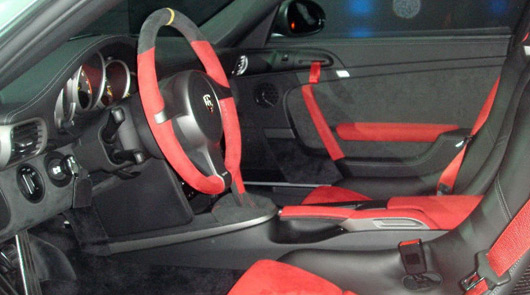
 2011 porsche 911 GT2 RS Interior
 2011 porsche 911 GT2 RS Parts
 2011 porsche 911 GT2 RS Inside
At the next Geneva Salon, Spring 2009, we got to see what Ulrich Bez Aston Martin and imagined, and it was not a new sedan that most believed – without a convertible! The concept car called a certain habituation, and although it did have character had Lagonda concept hard to convince everyone on the same obvious way that Aston Martin’s models usually do.
 Aston Martin SUV Lagonda
 Aston Martin SUV Lagonda
It was during a meeting in Rotterdam last week, as Ulrich Bez said that there are still 22 pieces One-77 for sale and that, in future, a four-wheel Lagonda. Much more than that wanted Ulrich Bez not tell but we may well presume that we need new ideas to convince David Richards on Lagonda project survival.
Business-wise, it would probably be on the right of Aston Martin to broaden its range with a four-wheel model. Porsche’s success with the Cayenne has not escaped anyone’s attention and the most important luxury car markets, there is no doubt to sedan model. Cooperation with Toyota mini-car around Cygnet also show that Aston is ready to take the unconventional approach.
 Aston Martin SUV Lagonda
 Aston Martin SUV Lagonda
The new generation has a bit more wheelbase and short overhangs, and is slightly wider than the old. At the Paris Salon recently, we see the coupe called the concept, but looked very finished out. Now notice, however, “sources familiar with” the series ready car first will appear as convertible at the NAIAS in Detroit in January. Sales will then start to summer.
 BMW 6 Series Convertible in Detroit 2012
 BMW 6 Series Convertible in Detroit 2012
Previously it has been said that the coupe-6-ball would appear in final form only at the Frankfurt motor show in autumn 2011, but the question is whether or not it is almost as complete as cabber, and if so, should bring series car debut in Geneva instead. No entirely credible information that there are at this moment.
It is clear however that the 6 Series Convertible range retains the classic soft top, and that the solution of the vertical and lowered the rear window between the characteristic “earflaps” left over from the current generation.
 BMW 6 Series Convertible in Detroit 2012
The engines are six and V8 from both 5 – and 7-series, with 306 and 407 horsepower, two-standard related to BMW’s åttastegade automatic transmission. Start / Stop is also standard.
We can also expect the new 6-ball (in both coupe and convertible version) gets most of the advanced equipment was launched with the latest 7-series and then were also transferred to new 5-series. This means, among other camera that reads road signs (including “speed limit ends”), fescue warning with steering wheel vibrations, blind spot monitoring, vindrutedisplay and spacers with automatic emergency brake.
Recent spy photos from the Nurburgring shows that new 6-series also comes in a muscular version of trim forge M GmbH, and in both coupe that cabber. The engine which is expected to be the 4.4-liter V8 with twin turbo which now sits in the M-branded models, X5 and X6. The effect should be between 570 and 580 horsepower. It is likely that the test car’s 20-inch wheels come with the finished M6-ball – which should be in showrooms sometime in autumn 2011.
 Audi R8 V10 Racing Edition by Anderson Germany
Anderson Germany is famous for its customization programs for models like the Ferrari California and the Lamborghini Gallardo Balboni, but now the German tuner has spead its wings and completed a new tuning kit for the Audi R8 V10 version. The new tuning kit provides changes to the sports car’s exterior as well as its engine.
Called the Racing Edition, the new package for the R8 includes an aerodynamic kit to add extra sportiness to the ride. The aerodynamic kit includes a carbon front apron and rear spoiler for downforce improvement. Rear window bordering, a carbon diffuser, carbon mirrors, and 19" light alloy rims complete the exterior package. The interior gets carbon fiber inserts on the door trims, radio frame, ashtray, gear stick frame, hand brake knob, and steering wheel.
A new ECU software, a sports air filter, and a valve commanded sports exhaust system take off about 37 lbs from the overall weight of the R8 and transform the performance of the R8 from 525hp to 585hp.
The package from Anderson Germany is actually similar to the tuning package provided by Wheelsandmore last month. Both package contained new ECU software as well as a new exhaust system, Wheelsandmore were able to get the R8 to pump out 600hp. If we had to choose, it’s obvious we’d head to the wheel experts giving us a bit more bang for our buck.
Wednesday, November 3, 2010
 Honda CR-Z Equipped with MUGEN Accessories
 To make the hybrid the exquisite machine you see in front of you, the Honda had to take on plenty of components including a full MUGEN body kit, a front grille, a rear wing spoiler, 17-inch "XJ" aluminum wheels, sport mats, a unique black aluminum shift knob, and a billet aluminum oil-filler cap. All of the painted parts will come color-matched to each of the five available CR-Z colors and each owner will receive a unique serial-number plaque designating each kit as one of 300 available.
Upon revealing this car in Las Vegas, Honda said: "The combination of greener practicality with style and fun makes this vehicle a perfect fit for young, environmentally conscious buyers looking to further personalize their cars."
Tuesday, November 2, 2010
Even if the luxury car market is still not large compared to the U.S. and Europe, it has a growth rate that allows the development curve points to very high numbers at the end of the decade. The car makers want to sell many “luxury” must therefore be present in China and have models that are tailored for the Chinese taste. While PSA Peugeot Citroen is well aware of this and you will not let the German colleagues to be alone on this lucrative market.
 Citroën Metropolis
 Citroën Metropolis
The cooperation between PSA and Changan Automobile Group will result in a group of premium models in which the Metropolis, or DS9, is one of the cars:
“The same design components to be used for a top model from Citroen to be developed in China,” said Gregoire Olivier to Automotive News China. However, he mentioned nothing about when this model would be ready and if it also is relevant for the European market.
Metropolis is the first concept car developed by the PSA’s own design studio in Shanghai and it was at the inauguration of the World Expo in the spring as it was unveiled. Citroën has not revealed all the details but the powertrain will consist of a two-liter gasoline V6 that provides 275 hp and 375 Nm, which indicates that Citroën makes use of turbocharging.
The transmission is a seven-speed dual clutch transmission. V6 driving the front wheels, while an electric motor at 40 kW/55 hp (quick “boost” effect 95 horses) drives the rear wheels. The system allows engines to work separately or together. Metropolis can run a few mil in city traffic completely emission free.
 2011Porsche 911 GT2 RS Wallpaper
 2011Porsche 911 GT2 RS
 2011Porsche 911 GT2 RS Image
 2011Porsche 911 GT2 RS Side view
 2011Porsche 911 GT2 RS
Monday, November 1, 2010
 Bugatti to begin selling Veyron in India
 Bugatti must be really confident in the buying power of the rich folks of India considering that the company has introduced the Veyron 16.4 Grand Sport in the country despite the ridiculous 110% import tax tacked to items like foreign exotic cars.
Add the car’s cost to the tax it comes with and to be able to purchase a Veyron in the country would mean that you would have to pay a staggering $3.6 million. Apparently, Bugatti is undeterred by the mammoth tax cars like the Veyron will be given, opting to focus more on the huge potential of the spending power of wealthy locals, which, according to analysts, could reach $14.7 billion as fast as 2015.
Satya Bagla, head of Exclusive Motors Pvt., the company that carries high-end brands Bugatti, Bentley, and Lamborghini, said that the Indian market, specifically the wealthy, are beginning to open up their bank accounts. “People have more spending power and are getting more aware of owning beautiful things,” she said.
 Dodge RedLine Charger 2011
Lost in the overly hyped Mustang versus Camaro tug-of-war is the Dodge Charger, Chrysler’s muscle-bound mayhem machine. It may not have the cache of its two competitors, but the 2011 Charger is anything but a push-over.
So what happens when you give the boys at Mopar Underground a 2011 Dodge Charger and let them work their magic on it?
Dodge CEO Ralph Gilles answered it best. “We let the designers of the production car and their friends at Mopar rip. I wanted them to show us what they would do with this vehicle if it were their own dream car.”
 Peugeot Shine Concept 2010
If Peugeot ever decides on introducing a new concept car, we highly suggest that they give Piotr Czyzewski a call.
The Polish designer is responsible for this stunning Peugeot concept called ‘Shine’. The four-seater coupe’s design is nothing short of jaw dropping. The sleek curves and aggressive linings give it the look of a stealthy puma ready to pounce on a very unfortunate – and unsuspecting – prey.
While the aesthetic and the glossy black color is enough to give the Shine Concept a VIP entry to the ‘Smoking Hot Concept’ Club, we still haven’t gotten to those opposite-opening doors that make the car look more awesome than it already is.
Czyzweski didn’t give any details on the performance package that comes with his work of art, but you can be assured that whatever’s under the hood of this car, it’s sheer appearance alone is all the evidence we need to know that this is one Peugeot concept the manufacturer should seriously think of rolling into the production block.
 Abarth Roadster 2012
News of Abarth preparing their own roadster started back in 2008 and, although we have caught some rumors here and there, nothing much has panned out leaving us to believe that Abarth will be clutched under the wing of other European brands forever. That, apparently, was an incorrect assumption.
Hoping to leave behind the disappoint that was the Smart Roadster, Abarth’s new Roadster model will feature an all new design, a transverse, mid-engined layout similar to that of the Lotus Elise. There are previous suggest reports suggesting the future Abarth model will share the chassis with the KTM X-Bow, but that is still under discussion. The car’s exterior design will be inspired by Abarth models of the 1960s.
Under the hood there will be the recently launched turbocharged 1.4-liter MultiAir, available with outputs as high as 170bhp. The engine will be mated to a new six-speed, dual-clutch gearbox, but a seven-speed version is also a possibility for the future.
Expect the new Abarth Roadster to debut in 2012, priced at around £25,000 (aprox. $40,000 at the current exchange rates). Abarth expects to produce a total of 5,000 units to sell worldwide.
 2011 Toyota Sienna Interior
 2011 Toyota Sienna TV
 2011 Toyota Sienna Inside View
 2011 Toyota Sienna Seats
 2011 Toyota Sienna Parts
Thursday, October 28, 2010
The specification of 2011 Mitsubishi Lancer Evolution X SE are a predictable blend of GSR and MR kit, including a GSR front fascia and black vents. along with an MR rear diffuser and upgraded Bilstein shocks. Inside, cloth Recaros come standard – our preferred choice compared to the MR’s leather-lined thrones. – autoblog.com
 Mitsubishi Lancer Evolution X SE
 Mitsubishi Lancer Evolution X SE
 Mitsubishi Lancer Evolution X SE
They have also included some pins between the wheels (of TRAK, you can see on the image side quite well) that reduces the distance between the tire and the body (or, more precisely, between the tire and fender area), reducing turbulence in the area and improving the performance also when riding fast. Logically, the downside is that it also significantly reduces off-road capability of the Juke.
 Nissan Juke 2011
 Nissan Juke 2011
The Juke, as did his brother the Qashqai, is reaping many best sellers, despite his short life and nel market. Japan has been quantified in 20,000 requests, while in the U.S. since it went on sale (early month) already has 17,500 orders.
In Europe we find a range of engines of 190 hp with 240 Nm of torque, 1.6-liter gasoline and a model 117 hp with 157 Nm and the same cylinder, in diesel engine there is a 1.5 liter dCi with 110 hp and 240 Nm of torque. In the United States currently offer only the variant of 190 hp turbo gasoline.
 Nissan Juke 2011
 Nissan Juke 2011
Sunday, October 24, 2010
 Lamborghini Sesto Elemento Paris Motor Show
If you're a car fanatic then undoubtedly you'll have been keeping a close eye on the 2010 Paris Motor Show. The place to see all the latest concept cars, the Paris Motor Show is the best place to see some truly amazing cars, of which a few become reality and will be pushed into production sometime in the future.
If you were unfortunate enough to miss this year's event, here's a little look at some of the cars that made the headlines.
Jaguar C-X75 - definitely one of the show stoppers at this year's event. The Jaguar C-X75 is driven by four in-wheel electric motors as well as twin jet turbines. A futuristic car, the C-X75 provides 780bhp, 1,180lbft of torque, and with a 560-mile range of which 68 miles are possible on battery power alone, this Jag is certainly a spectacular piece of machinery.
Lotus Esprit - Lotus were definitely aiming to steal the limelight this year and with no less than five high performance cars on show, they certainly made a huge impression. Equipped with a 5.0-litre V8 engine providing 620bhp, the Esprit manages 0-63mph in just 3.4 seconds. And a top speed of 205mph.
Lamborghini Sesto Elemento - weighing just 999kg, the Lamborghini Sesto Elemento is powered by a 570bhp V10. Achieving 0-62mph is just 2.5 seconds; the Sesto Elemento is certainly a rocket!
Range Rover Evoque - Range Rover's are famous for their heritage and the Evoque is without doubt futuristic looking. Deliveries of the Range Rover Evoque will start around summer 2011, with a five-door version to be unveiled later in 2010.
Lexus CT200h - Hybrid is definitely in at the moment and but it's only a matter of time before people become bored of the Toyota Prius. The Lexus CT200h is a premium hybrid that is trendy and hits 96g/km CO2.
Lotus Elan - here's another one of Lotus' concepts. Revival of one of Lotus' classics has been inevitable and long awaited. Fingers crossed that Lotus build this fantastic concept sometime in the very near future!
Car Insurance
Without a doubt if you're interested in purchasing one of the cars mentioned above, if they go into production, then it'll be well worth your while shopping around for car insurance. You'd certainly want to be covered against any mishaps in these beauties!
Saturday, October 23, 2010
For decades, BMW has made the reduction of emissions and fuel consumption a key part of its product development strategy, just as enhancements to the dynamic ability of each BMW have been a lasting, sustained brand value. BMW’s EfficientDynamics engineering philosophy – the pursuit of an enhanced, athletic driving experience while simultaneously lowering the consumption and emissions of each vehicle – resulted in the most dramatic drop in fleet consumption of any automaker from 1990 through 2005, according to an Environmental Defense study.

Now, the BMW Vision concept car clearly demonstrates that the EfficientDynamics objectives are fully compatible when applied to a sports car. Conceived as a 2+2-seater with plug-in full-hybrid technology, this unique car combines the performance of a BMW M vehicle with a standard of fuel efficiency and emission management that exceeds even the current levels achieved by the latest small cars. This outstanding result is made possible by the combination of BMW ActiveHybrid components with an extremely economical combustion engine, and outstanding aerodynamic qualities.
BMW EfficientDynamics Concept is the result of a “clean-sheet” development process to ensure that the correct achievements were made in the areas of efficiency, driving pleasure, technology, and emotional design. BMW EfficientDynamics Concept is the most comprehensive implementation of the EfficientDynamics philosophy seen so far. The powertrain provides a top speed limited electronically to 155 mph, with acceleration to 100 km/h in 4.8 seconds. Average fuel consumption in the EU test cycle is 3.76 liters/100 kilometers, equal to 62.6 mpg, and the CO2 emission rating is 99 grams per kilometer. CO2 emission management is even more outstanding when driving in the all-electric mode after charging the battery from a plug-in source: Taking all emissions in the generation of electricity into account, as prescribed by the EU formula, the car’s emission rating is just 50 grams per kilometer.
 BMW EfficientDynamic Concept
 BMW EfficientDynamic Concept
Through this unique balance of driving pleasure and fuel efficiency, the BMW EfficientDynamics Concept car clearly demonstrates the potential of BMW ActiveHybrid technology, which makes its world debut at the 2009 Frankfurt Motor Show in the BMW X6 ActiveHybrid and BMW 7 ActiveHybrid production models.
The power and performance are made possible by combining a fuel-efficient 3-cylinder turbodiesel with one electric motor on each axle. The intelligent combination of these units, together with precisely controlled energy management, simultaneously enhances the dynamic performance and the efficiency of the car. Overall system output is 356 horsepower, and peak torque is 590 lb-ft. The special arrangement of the two motors and diesel engine allows all-wheel drive when driving in all-electric mode. The result is minimum power loss and a harmonious transmission of the power available under all conditions.
In its design, BMW EfficientDynamics Concept for the first time conveys the dynamic look of a BMW sports car to a hybrid vehicle. Developed with decades of experience in Motorsport, the body of this unique sports car is a result of intelligent lightweight technology and aerodynamic efficiency. In the design of the interior, the focus was likewise on both the fascinating driving experience and, in particular, on transparent, hands-on technology and maximum reduction of weight.
Turbodiesel engine with unprecedented specific output.
The combustion engine is a cutting-edge turbodiesel featured for the first time in the BMW EfficientDynamics Concept car. Displacing 1.5 liters on three cylinders, the engine consistently follows the downsizing principle of using a relatively small engine combined with a turbocharger to reduce fuel consumption.
Through its compact dimensions, the 3-cylinder fits conveniently in front of the rear axle like in an agile mid-engine sports car, despite the two seats at the rear. Fuel is injected by the latest generation of High Precision Direct Injection, and the turbocharger features variable intake geometry for maximum efficiency. Engine output is 163 hp with peak torque of 214 lb-ft.
The specific output of 109 hp per liter sets a new benchmark in diesel technology. The power delivered by the turbodiesel is conveyed to the rear axle by means of a double-clutch transmission (DCT). This advanced transmission technology, which already offers a particularly dynamic driving experience in BMW’s M3 and Z4 Roadster, allows the driver to shift gears without the slightest interruption of power. BMW EfficientDynamics Concept features a newly-developed version of BMW’s DCT with six speeds for maximum efficiency and flexibility.
Two electric motors for full-hybrid drive.
The combustion engine is supplemented by two electric motors. Consistently applying the BMW ActiveHybrid philosophy, development engineers followed the principle of “Best of Hybrid,” choosing the optimum combination of a hybrid synchronous motor on the front axle and a full-hybrid system at the rear.
In this concept, the driver benefits from the efficiency of the electric motors over a far wider speed range than with a conventional hybrid car. The rear axle comes with a second-generation full-hybrid system corresponding to the technology in the BMW ActiveHybrid 7 production model. The compact electric motor positioned between the diesel engine and the DCT outputs a consistent 33 horsepower and is able to reach a peak of up to 51 hp. Maximum torque for the rear electric motor is 214 lb-ft, the power, either supporting the diesel engine or in all-electric motoring. When coasting or applying the brakes, the electric motor acts as a generator and feeds electric power to the lithium-polymer battery in the car. The electric energy developed in this way is therefore captured without any additional consumption of fuel through the principle of Brake Energy Regeneration. Energy wasted on the brakes of a conventional car is thus saved within the new power system for subsequent use in driving the car.
A second electric motor acts on the front axle. This engine, a hybrid synchronous motor, offers continuous output of 80 horsepower and peak torque of 162 lb-ft. Extra power of 112 horsepower is available for a period of up to 30 seconds, and, for a 10-second “burst,” the electric motor is able to develop 139 horsepower. The power is transmitted through a 2-stage, single-speed reduction gearbox.
BMW EfficientDynamics Concept is able to run completely under electric power, with the power of the turbodiesel engine alone, or through an infinite combination of the three power sources. Depending on driving conditions, the two electric motors may be used both for accelerating and for regenerating energy when applying the brakes and while coasting. This principle ensures efficient energy management, with the charge status of the lithium-polymer battery constantly remaining within the optimum range. When accelerating, the electric motors help to boost the car for even greater performance, ensuring immediate response and a significant reduction in fuel consumption. For a short time, such as in passing maneuvers, the cumulative maximum output of all three engines increases to 356 hp, with maximum torque generated by the three engines reaching 590 lb-ft.
Lithium-polymer battery for electrical energy.
The energy cells featured in BMW EfficientDynamics Concept are housed in a chassis element running from front to rear through the middle of the car. The front unit is the lithium-polymer complex, an ongoing development of the lithium-ion battery. Overall, BMW EfficientDynamics Concept comes with a total of 98 lithium-polymer cells, each offering a capacity of 30 amp/hours and developing continuous output of 600 Amps at a voltage of 3.7 V. For a period of 30 seconds, each cell is even able to develop maximum output of 1,200 Amps.
Serial arrangement of the lithium-polymer cells serves to generate nominal voltage of 364 volts, the gross storage capacity of the battery is 10.8 kW/h. With an unusually high discharge capacity of 80 percent, the battery delivers 8.6 kW/h for driving the car. This superior performance comes on overall weight of the entire energy storage system of just 187 lb. A further advantage is that through their optimum dimensions tailored to the specific qualities and features of the car, the lithium-polymer cells, together with the operating strategy chosen with a concept of “forward looking” energy management, reduces the thermal load acting on the battery to such an extent that there is no need for active cooling.
Plug-in solution: convenient charging of the electric power system from a conventional power socket.
Brake Energy Regeneration captures electric power generated while driving without additional fuel consumption, which is subsequently used to supply power to the electric motors and on-board network. A further option is to connect the lithium-polymer cells to a conventional power socket for a simple and efficient charge process, using a plug-in connector in the front-right wing of the car. Connected to a standard EU power outlet (220 V, 16 Amps), the system requires a maximum of 2 ½ hours to fully charge the lithium-polymer cells. And wherever a power source with higher voltage and amperage (380 V, 32 Amps) is available, the charge time is an even shorter 44 minutes.
In addition to electrical energy storage, BMW EfficientDynamics Concept comes with a conventional fuel tank at the rear end of the central chassis tunnel, offering a capacity of 6.6 gallons. Running on diesel fuel alone, BMW EfficientDynamics Concept is able to cover a distance of approximately 400 miles with its combustion engine. Benefitting from an extra range of up to 31 miles in the all-electric mode, the car offers an overall range of approximately 431 miles. As a result, this unique concept car offers all the requirements for using energy with maximum efficiency and at the same time experiencing the dynamic performance typical of BMW without any restriction of everyday driving qualities.
Performance, fuel efficiency and emission management opening new dimensions in hybrid technology.
The power delivered by the two electric motors and single diesel 3-cylinder engine gives the BMW EfficientDynamics Concept a level of performance superior to anything provided so far by a hybrid vehicle. Acceleration from a standstill to 100 km/h, for example, comes in just 4.8 seconds and the car could exceed its electronically-limited 155 mph top speed.
At the same time fuel efficiency and emission management now reach a standard only achieved, if at all, by far less powerful small cars conceived for city traffic and short distances. Applying the criteria of the EU test cycle, BMW EfficientDynamics Concept offers average fuel consumption equal to 62.6 mpg. CO2 emissions, in turn, are 99 grams per kilometer. These consumption and emission figures are measured on a consistent internal power balance, meaning that the batteries and storage media for electrical energy maintain the same charge level throughout the entire test cycle (with the same level at the beginning and end) and are charged while driving only by the car’s on-board systems.
As a plug-in hybrid, BMW EfficientDynamics Concept is able to cover the entire drive cycle for measuring fuel consumption also with its combustion engine completely switched off. Then, to subsequently charge the lithium-polymer cells to the same status as when setting off, all the driver has to do is connect the car to an external power grid. To determine the consumption of electric power, the only requirement is to compare the charge level of the battery before and after the test cycle. Applying this measurement process, the BMW EfficientDynamics Concept car consumes 17.5 kW/h per 100 kilometers, equal to a CO2 emission rating of just 50 grams per kilometer in the EU test cycle.
To determine the total volume of CO2 emissions when driving in the all-electric mode, new legal standards for measuring the level of fuel consumption are currently being prepared for hybrid and electric cars with a plug-in power supply. Applying this calculation method, the CO2 emission ratings generated by BMW EfficientDynamics Concept are reduced further to just one-third of the original figure of 99 grams per kilometer. Clearly, this significant reduction of emissions opens up a new dimension in BMW’s EfficientDynamics development strategy in this unique concept car.
Aerodynamic qualities reflecting BMW’s Motorsport experience.
BMW EfficientDynamics Concept also takes a new approach in its design and streamlining, the body and the interior clearly expressing the unique combination of supreme efficiency and the sporting performance of the brand. Following BMW’s design language, this concept car visualizes both highly efficient aerodynamics and intelligent lightweight construction.
In its design, BMW EfficientDynamics Concept differs from the usual low-emission car concepts. The principle of “form follows function” is not just for the overall look of the car, but embraces each and every detail. Measuring 48.8″ in height and boasting a sweeping, arch-like roofline, BMW EfficientDynamics Concept offers the slender silhouette of a classic Gran Turismo. With the combustion engine fitted in front of the rear axle, the designers have succeeded in giving the car a very low front end, with the flow of air being further smoothened by active louvers in front of the radiator, which close completely when the need for cooling air is low. This efficient function follows in the footsteps of the active air flap control already used as a feature of BMW EfficientDynamics in some of BMW’s current production models. As a further highlight, BMW EfficientDynamics Concept guides air smoothly and exactly as required into the car through an active air intake at the front.
Numerous details in the design of the body are based on the know-how BMW has gained in Motorsport, a number of body elements serving as air deflectors and guide vanes. Designed as ducts, for example, the A-pillars serve to channel the flow of air in the same way as the rear lights with their wing profile. The floor of the car is fully covered from front to rear and from one side to the other, thus maintaining a smooth surface to avoid any air swirl liable to increase fuel consumption. Slender openings around the front air dam guide the air flowing specifically into two closed ducts leading inside the front air dam to the wheel arches where the air comes out again through a very slim aperture at high speed, flowing just next to the outer wheel flanks. This air jet rests on the front wheels like a curtain and is therefore referred to most appropriately as the “air curtain.” It provides a highly stabilizing effect.
Overall vehicle concept for a drag coefficient of just 0.22.
To further optimize the aerodynamic qualities of the entire vehicle and keep rolling resistance to a minimum, BMW EfficientDynamics Concept comes with tires and wheels of quite unusual size on a sports car. The tires measure 195/55, while large 21-inch wheels provide a contact surface on the road otherwise offered only by a much wider tire. In combination with the sophisticated axle geometry, this ensures agile driving behavior.
The extra-large wheel covers extending over part of the tire flanks add to the unique, very different look of BMW EfficientDynamics Concept from the side. The blade profile integrated in the wheels serves furthermore to reduce the negative effect of the turning wheels on the overall aerodynamics of the car. In all, these features optimizing the aerodynamic qualities of the car give the BMW EfficientDynamics Concept car a very low drag factor (CX) of just 0.22.
Technological look as a strong impression of intelligent lightweight construction.
In both exterior and interior design, BMW EfficientDynamics Concept stands out clearly as a strong spearhead in technology. Many components of the vehicle are presented in full view expressing the “transparent” character of the car as a powerful visual feature of lightweight technology. The chassis and suspension of BMW EfficientDynamics Concept are made completely of aluminum; the roof and the outer skin on the doors are made almost completely of a special polycarbonate glass automatically darkening as a function of the light shining on the car.
Measuring 181.1″ in length, 74.8″ in width and 48.8″ in height, this unique concept car offers ample space for up to four passengers and their luggage. Thanks to the consistent lightweight construction strategy applied on the car, curb weight is 3,076 lb, with the center of gravity remaining very low. In its power-to-weight ratio, the BMW EfficientDynamics Concept car is far superior to all other hybrid cars, achieving the same standard as extremely dynamic sports cars with a conventional combustion engine.
Carrying a maximum payload of 981 lb, this unique 2+2-seater is fully suited for everyday traffic. Luggage capacity of 5.3 cu ft, in turn, allows the driver and passengers to conveniently take along two golf bags. And to meet additional loading requirements the backrests of the two rear seats may be tilted down individually to provide extra storage space.
Emotional design through sculptural shapes and layering technology.
Reflecting the innovative drive concept of this unique car, the design of BMW EfficientDynamics Concept likewise takes a new approach in combining functional progress with a most powerful emotional impact.
This has been achieved through the close cooperation of BMW’s Design and Technical Development Divisions starting at an early point and continuing consistently throughout the entire development process. The result is a brand-new vehicle architecture with the drive components as well as the body and interior elements perfectly coordinated and matched to one another with maximum flexibility and individual style.
A fully integrated design philosophy also provided new options in using harmonized design principles connecting the exterior and the interior and providing an interacting effect between the two areas.
Sculptural design language giving BMW EfficientDynamics Concept a fully harmonized, complete look ensures the proportions typical of a BMW sports car. The front, side, rear and roof areas, for example, flow smoothly into one another. Dynamically contoured surfaces and shapes, in turn, create highly attractive light and shade effects accentuating the light and sporting character of the car in an emotional manner.
Layering technology developed by the BMW Group Design Division acts as the fundamental guideline in designing the exterior and interior. Applied for the first time in exterior design, this technology layers one surface on top of the other, creating very smooth seams and joints to reduce the number of components and, accordingly, the weight of the car. As a result, BMW EfficientDynamics Concept meets the most demanding aerodynamic requirements without using any additional body elements, simply through the structure of the surfaces optimized for a smooth flow of air.
Interior: innovative lightweight construction and unprecedented orientation to the driver.
In the design of the interior, innovative layering technology provides an unprecedented symbiosis of function and stylish shapes intentionally reduced to a minimum, consistently implementing and visualizing the lightweight principle also inside the car.
Specific components such as the central air vent not only serving to enhance motoring comfort but also acting as part of the cockpit, perform several functions in one. This multi-functionality is then presented visibly within the car, the use of particularly sophisticated materials providing a highly attractive combination of innovation in technology and quality clear to the eye and the touch of the surface.
This interaction of lightweight construction and individual well-being also comes out clearly in the design of the controls and switches, with a leather band, for example, running round the aluminum gear selector lever on the center console. Materials combining lightweight technology and all the qualities required are also to be admired all round the cockpit of BMW EfficientDynamics Concept, giving the car an unusually generous feeling of space for a 2+2-seater. The body-contoured seats, for example, are made up of a kevlar shell, a backbone structure, and seat padding with personalized fillings. Clearly, this combination alone ensures comfort at a minimum weight. The driver’s and front passenger’s seats are connected firmly to the center console to form a joint interior “landscape”, while the rear seats anchored on the floor would appear to be hovering in space. Natural materials and light colors on the seat upholstery and all interior linings underline the light, sophisticated and sustainability-oriented atmosphere within the passenger compartment.
The instrument panel is deliberately padded only where technical components have to be appropriately covered, thus making an important contribution to passenger safety in the event of a collision. The instrument cluster played a fundamental role right from the start in the design process, serving as the starting point for all surfaces within the interior and thus creating a particularly powerful rendition of that driver orientation typical of BMW.
Innovative light technology: providing clear signals to the outside and offering soothing ambient illumination inside in a unique symbiosis.
LED lights at both the front and rear end of BMW EfficientDynamics Concept provide an innovative combination of the symbols typical of the brand and clear design language oriented towards trendsetting technology. The distinctive look of the dual round headlights characteristic of a BMW is emphasized in particular by the use of LED technology. The rear lights are integrated also in their function into the design of the entire rear section, forming part of the rear air deflector and thus merging completely into the rear contour.
Extremely flat and compact, the rear lights are made up of innovative LED units forming a smooth and consistent red surface when not in use. Only when used do the respective light chambers take on the appropriate color such as yellow on the direction indicators. This innovative light technology also provides an intense symbiosis of the exterior and interior, again promoting and further refining the driving experience.
This is also why the ambient illumination of the interior comes with new features and qualities, the light sources within the passenger compartment being fed from the positioning lights at the side, the rear lights and the brake lights, thus changing the atmosphere created by the lights within the car as a function of driving conditions.
The optical impression conveyed by BMW EfficientDynamics Concept also results in other areas from the symbiosis of the exterior and interior, eliminating the conventional barriers between the two. The lines within the interior, for example, continue on to the innovative design of the engine compartment lid, while in its shape the third brake light positioned higher up on the car follows the structure of the glass roof and tapers to the outside where the roofline moves down gently to the rear.
Overhead doors for convenient access to all seats.
The doors on BMW EfficientDynamics Concept open up like bird’s wings, turning on pivots in the front roof column at the level of the side direction indicators. Since the car has no B-pillars, the large door cutouts ensure convenient entry also to the rear seats. The pivots on the doors also provide the base for the exterior mirrors, thus forming an ideal combination of function and aesthetic design. The structure of the doors is also characterized by several layers of materials on top of one another and the optical and functional symbiosis of the interior and exterior this technology is able to offer. Made up of three layers, the overall structure comprises the outer glass surface, an interim load-bearing layer, and the interior cover with its particularly smooth shapes and fl owing forms clearly visible to the passengers, layering technology again, therefore, opening up new perspectives.
The large glass surfaces extending far down on the body also provide a strong optical impression of the low seating position close to the road. And at the same time a stable sidebar ensures the body stiffness and crash safety naturally required on every vehicle. Flowing to the inside at its central point, this safety element also serves as an armrest. This interplay of the three layers also helping to minimize the weight of the car continues on the trim bar running along the door and extending out of the armrest, finally flowing into the outer door opener on its path from inside to outside.
Clear focus on the essential: 3-dimensional Head-Up Display.
Layering technology is also used on the displays in the instrument cluster and in the Head-Up Display developed to an even higher standard on BMW’s new concept car. The Display now creates a powerful impression of three dimensions, at the same time providing the option to present various signals more in the front or more in the background, depending on their relevance and current driving conditions.
The Head-Up Display projects information important to the driver on to the windscreen. Indeed, innovative presentation technology even allows the superimposed presentation of several views in three dimensions, keeping, the gauge graphics visible in the background while the latest information on route guidance or warning signals from BMW Night Vision, for example, are shown in the foreground.
The sequence in which such signals appear depends on the driving mode chosen by the driver, the display technology, again depending on the driver’s personal preference, enhancing a particularly sporting, a more comfort oriented, or an efficiency-based style of motoring. Through its design alone, the BMW EfficientDynamics Concept car clearly shows that highly efficient individual mobility may by all means be presented in emotional style. BMW already offers models in all vehicle segments which, compared with the competition, ensure the lowest level of fuel consumption and emissions combined with superior power and performance.
And now BMW EfficientDynamics Concept confirms BMW’s commitment to offer a perfect combination in future of unique driving pleasure and optimum qualities in the responsible use of natural resources.
In the design process the need for sustainable management is borne out most clearly by the GINA (Geometry and Functions in N-fold Augmentation) concept developed by the BMW Group. In this case maximum creative freedom sets the foundation for innovative solutions challenging the conventional and meeting the requirements of the future. This makes the GINA principle particularly well-suited for developing visions for the future reflecting both the wish for emotional style and individual character as well as the quest for sustainable management and efficiency. From the dimensions of its wheels through the design of the rear lights and all the way to the configuration of the cockpit, BMW EfficientDynamics Concept therefore boasts a number of details both outside and inside which, going far beyond conventional solutions, open up a new approach to maximum efficiency and that Dynamic ability typical of BMW.
Forward-looking energy management adjusting to individual requirements.
With the individual system components on board BMW EfficientDynamics Concept being networked with one another, conditions are perfect for implementing a forward-looking system of energy management using information gathered by the sensors of the driver assistance units fitted in the car. Data provided, for example, by the rain sensor or Active Cruise Control with its Stop & Go function as well as by the navigation system, and subsequently evaluated by the central control unit, offers an overview of current and upcoming driving conditions. Then, evaluating such data, the on-board computer is able to forecast driving conditions on the stretch of road immediately ahead, such calculations serving to prepare the car for upcoming requirements and make efficient use of the energy available through optimum operation of all systems.
Should the high-performance central computer establish, for example, that the driver is about to take the motorway, the power used for running the cooling system is reduced for a certain period in advance, on the assumption that the short increase in coolant temperature resulting from such an energy-saving measure will quickly be set off by the higher speed of the car on the motorway. Another example of such pre-conditioning is the regeneration of energy from the air conditioning, from Electronic Power Steering and the Brake Assistant.